

Ripening Room Systems – Controlled Fruit Maturation Solutions
Ripening Room Systems provide controlled environments to ripen bananas, mangoes, avocados, kiwifruit and other fruits with precise temperature, humidity and ethylene control — ensuring uniform quality and reduced waste.







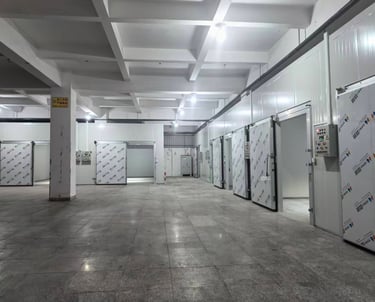
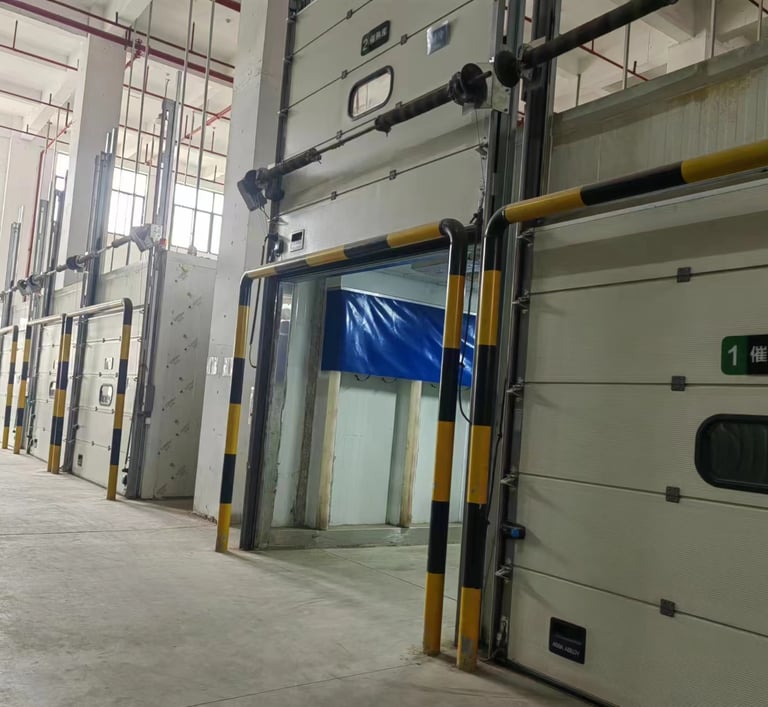
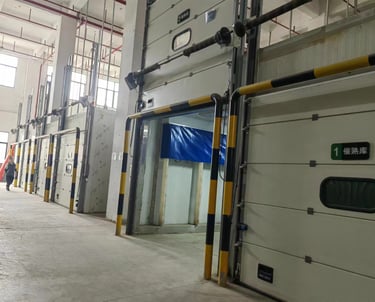
What Is a Ripening Room System?
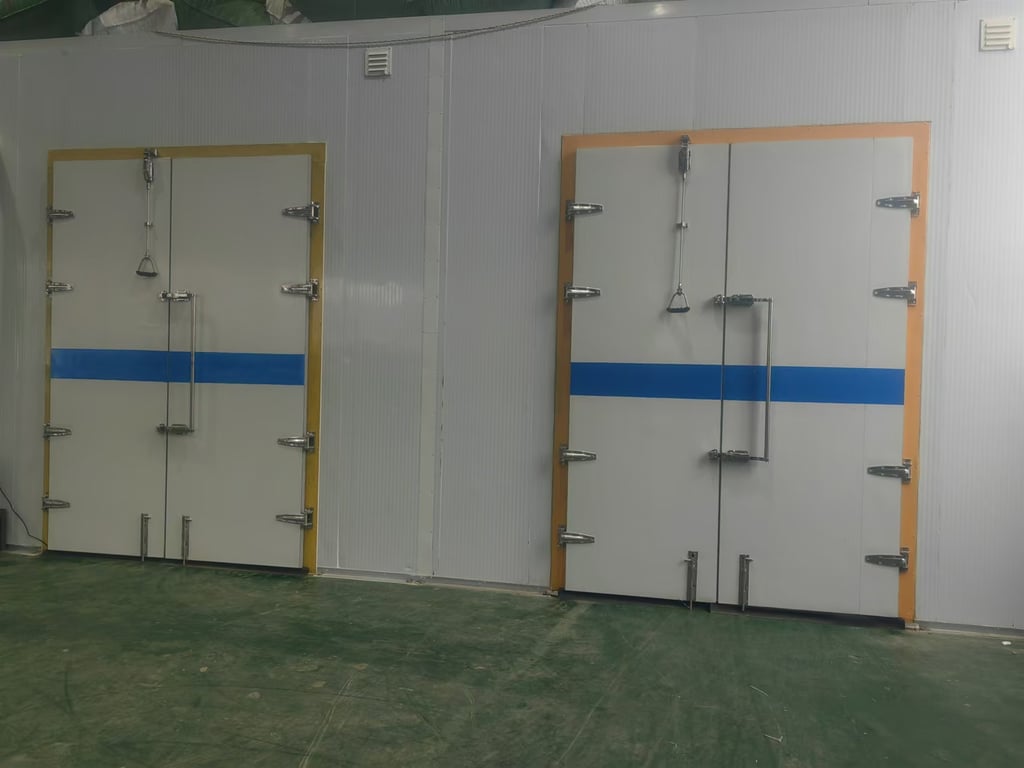
A ripening room system is a temperature, humidity and gas-controlled environment designed to accelerate and standardize the ripening process of climacteric fruits — such as bananas, avocados, mangoes and kiwifruit — by creating optimal conditions for color, texture and flavor development.
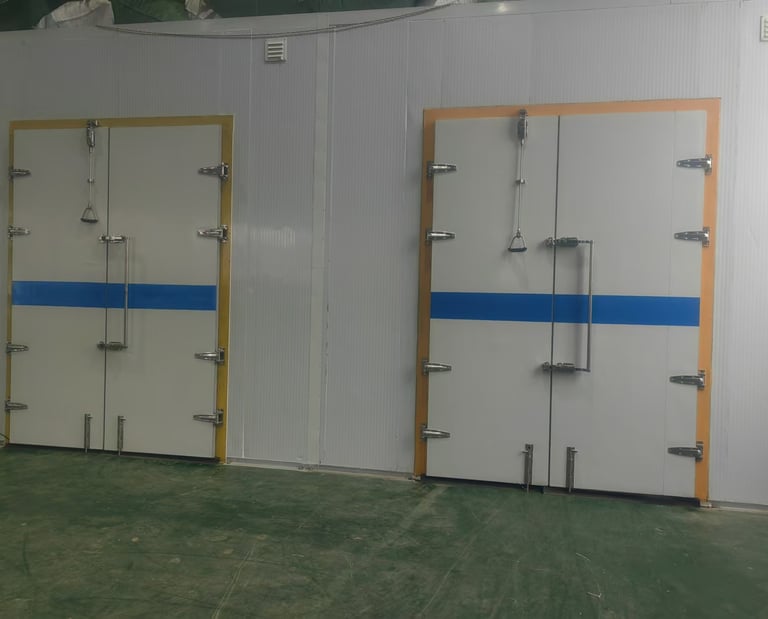
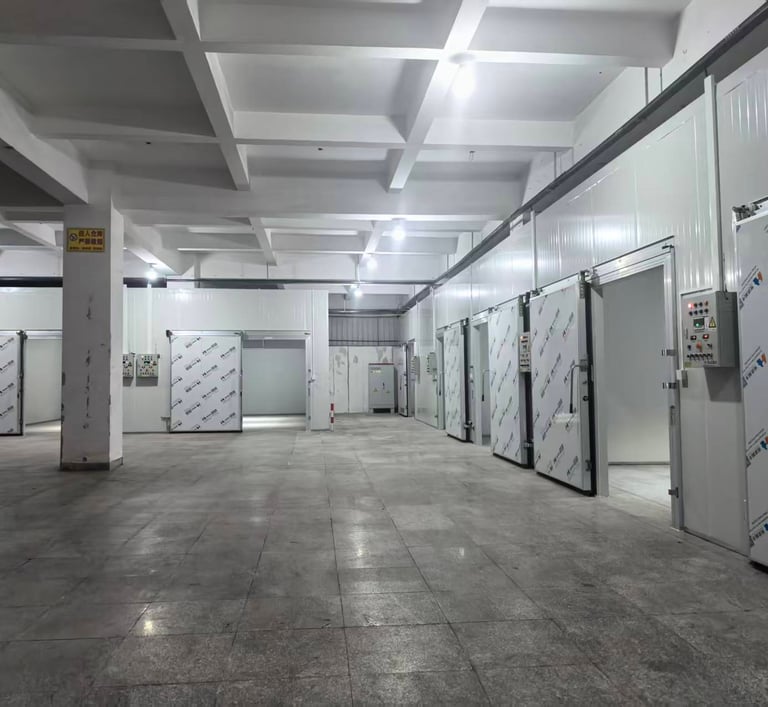
Ripening rooms are built using high-insulation panels and advanced refrigeration components, combined with automated environmental control systems to deliver uniform, consistent results.
Why Choose Ripening Room Systems?
Fruits like bananas and mangoes naturally ripen over time, but without a controlled environment this process can be uneven, slow or wasteful. Ripening room systems create precisely regulated conditions to:
Promote uniform ripening with adjustable temperature, humidity and ethylene gas exposure.
Reduce fruit weight loss and spoilage during ripening cycles.
Improve flavor, texture and visual appeal of ripened fruit.
Enable remote monitoring and automation for consistent operations.
How Ripening Rooms Work
A professional ripening room system typically includes:
Temperature & Humidity Control
Precise thermostats and humidifiers regulate the internal environment, ensuring optimal ripening conditions based on fruit type.
Ethylene Management
Ethylene — a plant hormone used to trigger and accelerate ripening — is managed within the room to produce uniform results and reduce waste.
Advanced Air Circulation
Forced air circulation delivers uniform airflow across all fruit pallets, helping ensure even ripening throughout the chamber.
Automated Monitoring & Control
Modern systems integrate real-time sensors, data logging and optional remote controls to allow operators to monitor and adjust ripening conditions easily.
Temperature & Usage Guide
Ripening room conditions depend on fruit type. Typical examples include:
Types of Ripening Rooms
Traditional Ripening Chambers
Traditional ripening chambers rely on manual ethylene introduction and fixed or semi-fixed environmental settings. Temperature and humidity are usually adjusted by basic controllers, and ripening decisions depend heavily on operator experience.
These rooms are typically chosen for small-scale or budget-focused operations, where initial investment is a key consideration.
Key Characteristics:
Manual or semi-manual ethylene dosing
Limited automation and monitoring
Single-zone temperature control
Ripening results highly dependent on operator skill
Limitations:
Uneven ethylene distribution may cause inconsistent color development
Higher risk of over-ripening or under-ripening
Greater labor dependency and operational variability
Less suitable for large volumes or multi-fruit programs
Best suited for:
Small wholesalers and local distributors
Operations with stable, low daily throughput
Markets where uniformity standards are less strict
Smart Ripening Rooms
Smart ripening rooms are fully automated, sensor-driven systems designed for precision ripening and industrial-scale operations. They integrate advanced controls for temperature, humidity, ethylene, CO₂, and air circulation, ensuring uniform ripening across all pallets.
These systems use real-time monitoring, programmable ripening recipes, and intelligent alarms to maintain optimal conditions throughout the ripening cycle.
Key Features:
Automated ethylene injection and exhaust control
Continuous monitoring of temperature, humidity, O₂ / CO₂ levels
Programmable ripening curves for different fruits
Uniform airflow design for consistent pallet-to-pallet results
Operational Advantages:
Highly consistent color, firmness, and flavor development
Reduced product loss and weight shrinkage
Lower labor costs through automation
Easy adaptation for bananas, avocados, mangoes, kiwifruit and other climacteric fruits
Best suited for:
Importers, ripeners, and large distribution centers
Supermarket supply chains with strict quality standards
Multi-fruit and high-throughput ripening operations
Facilities requiring dual-temperature zones or future expansion
Summary Comparison (Operational Perspective)
Traditional chambers prioritize lower upfront cost but involve higher operational risk and variability
Smart ripening rooms deliver superior uniformity, efficiency, and long-term cost control
For businesses focused on consistent quality, scalability, and brand reliability, smart ripening rooms provide a significantly higher return on investment over time.
Typical Applications
🍌 Banana Ripening
Banana ripening rooms provide precise control of temperature, relative humidity, ethylene concentration and air circulation, ensuring uniform ripening across all pallets and layers.
Through controlled ethylene injection and exhaust cycles, bananas achieve consistent peel color, optimal pulp softness and complete starch-to-sugar conversion.
This controlled process significantly reduces uneven ripening, green tips, over-softening and internal defects, while lowering fruit loss and improving shelf-life stability for distribution and retail.
🥭 Mango Ripening
Mango ripening requires careful balance between temperature and ethylene exposure to avoid surface coloring without internal maturity.
Optimized ripening environments allow mangoes to develop full aroma, balanced sweetness and attractive skin color, while preventing excessive dehydration and shriveling.
By applying controlled ripening programs, mangoes reach the market with improved flavor consistency and higher consumer acceptance, making them suitable for both local and export distribution channels.
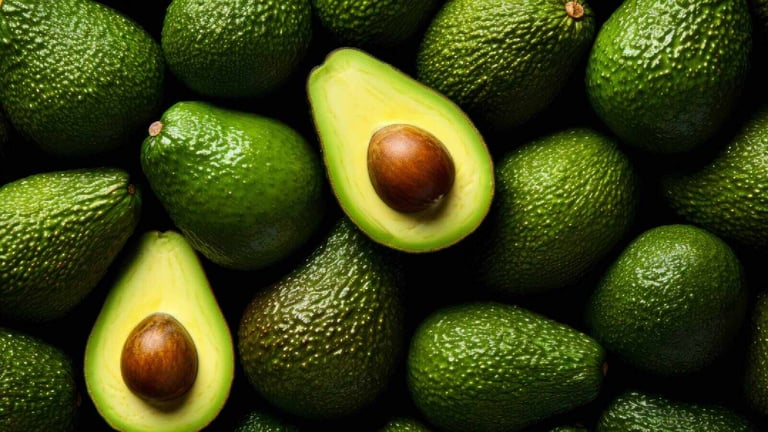
🥑 Avocado Ripening
Avocado ripening demands high precision due to its sensitivity to temperature, ethylene levels and carbon dioxide accumulation.
Smart ripening controls ensure uniform softening from skin to core, while minimizing weight loss, internal browning and uneven texture.
By maintaining stable conditions and continuous monitoring, avocados achieve predictable ripeness stages, enabling just-in-time delivery, reduced spoilage and better inventory management for wholesalers and retailers.
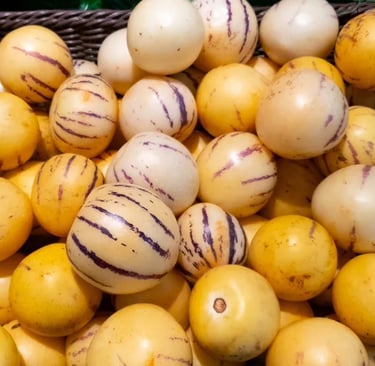
🥝 Kiwifruit & Other Climacteric Fruit Ripening
Kiwifruit and other climacteric fruits benefit from controlled ripening environments where ethylene exposure, temperature and gas composition are accurately regulated.
Specialized programs allow gradual and even ripening, improving sweetness, texture and overall eating quality.
These systems are also suitable for a wide range of climacteric fruits, providing flexibility, reliability and repeatable ripening results across different varieties and seasonal conditions.
Customization Options
Every ripening room system can be customized according to specific project needs:
Room dimensions and pallet capacity
Temperature and humidity range
Ethylene dosing systems
Airflow design
Monitoring and control automation
Dual temperature zone configurations for continuous throughput
Key Benefits
Uniform fruit ripening with precise environmental control
Reduced spoilage and weight loss
Remote or automated adjustments
Scalable system designs for small to large facilities
Meets food-safety standards and improves product quality
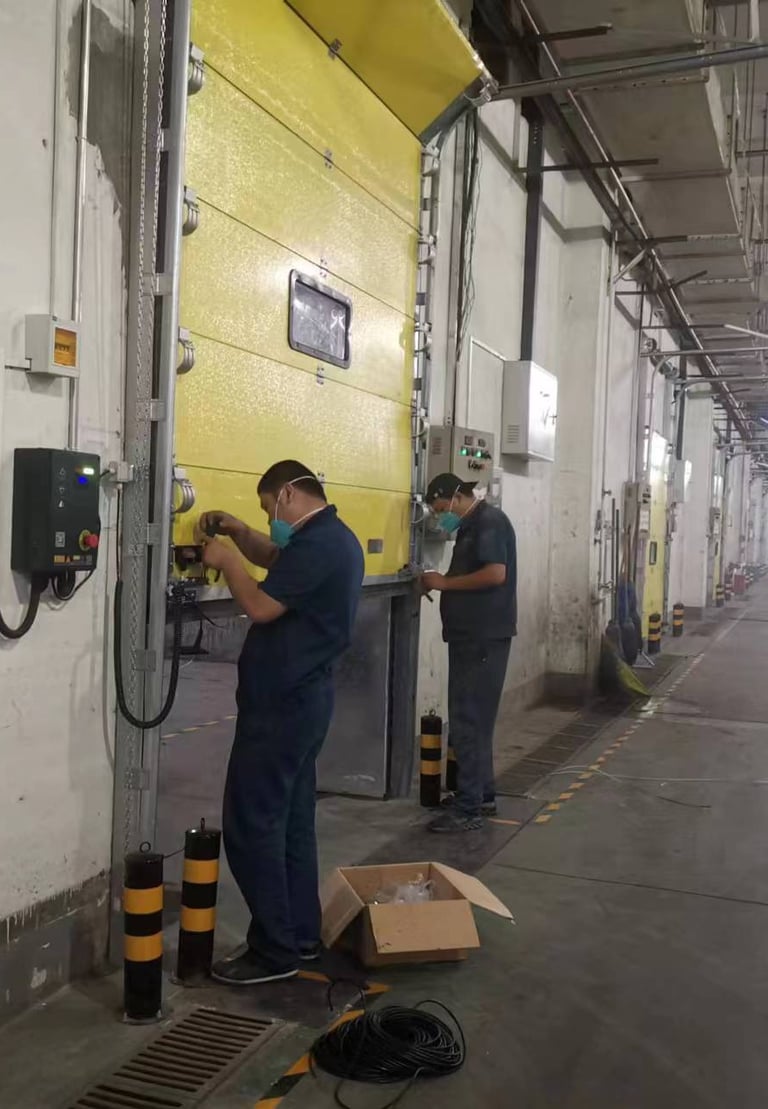
Installation & Support
Ripening room systems are:
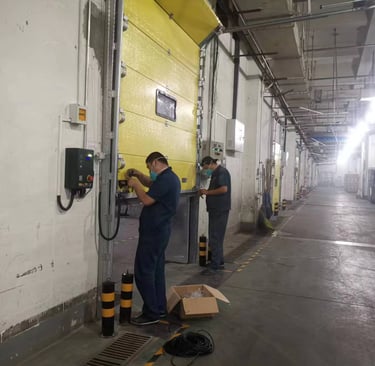
Pre-fabricated and assembled quickly
Engineered to match production workflow
Commissioned and tested before operation
Backed by technical support to ensure long-term performance
Frequently Asked Questions (FAQ)
Q1: Can different types of fruit be ripened in the same room?
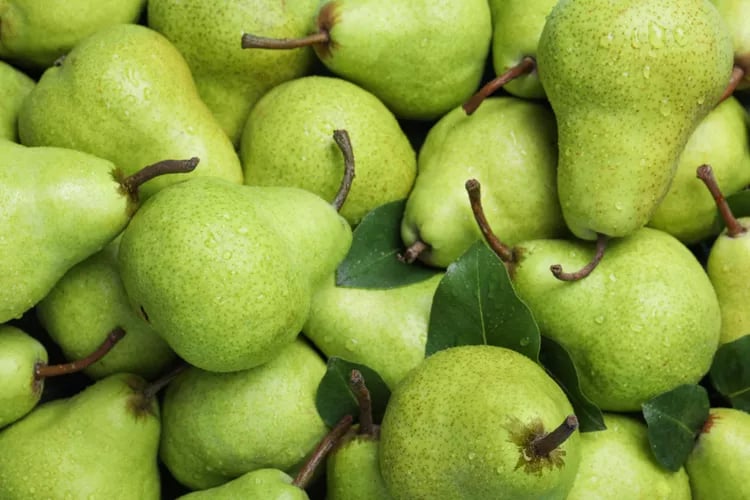
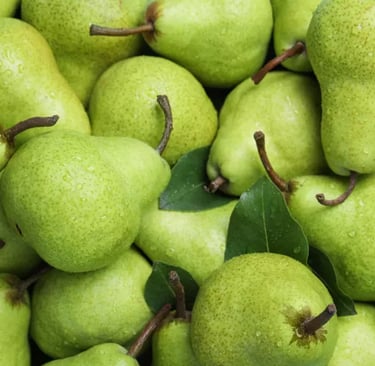
Yes — ripening rooms can be configured for multi-fruit applications, including bananas, avocados, mangoes, pears, kiwifruit and other climacteric fruits.
However, different fruits have distinct ripening requirements in terms of temperature range, ethylene concentration, humidity and ripening duration.
For this reason, multi-fruit operation is usually managed in one of the following ways:
Batch-based ripening: One fruit type per cycle, with parameters adjusted according to the selected fruit.
Zoned ripening: Different areas or chambers operate under independent control.
Program-based control: Pre-set ripening programs optimized for each fruit variety.
With intelligent control systems, operators can easily switch between fruit types while maintaining consistent quality, reduced loss and predictable ripening results.
Q2: What is a “Dual Temperature Zone” room?
A Dual Temperature Zone ripening room allows two independent temperature-controlled areas within a single system, enabling simultaneous ripening at different stages or for different fruits.
Each zone can be individually managed for:
Temperature
Ethylene injection timing
Ventilation and exhaust cycles
Ripening duration
This configuration is especially useful for operations that require:
Staggered ripening schedules
Flexible daily output volumes
Improved space utilization
Reduced operational downtime between batches
Dual zone systems help maximize throughput while maintaining precise control and energy efficiency.
Q3: How does the intelligent ripening system ensure uniform ripening?
Uniform ripening is achieved through a combination of:
Controlled air circulation to ensure even gas distribution
Precise ethylene dosing based on room volume and fruit load
Continuous monitoring of temperature and humidity
Automated exhaust cycles to prevent gas accumulation
Advanced systems can also integrate fruit pulp temperature sensors, ensuring that internal ripening matches external appearance.
This eliminates common issues such as uneven color, hard cores, or over-softened fruit.
Q4: Do intelligent ripening rooms reduce dependence on skilled operators?
Yes. One of the key advantages of intelligent ripening systems is their ability to significantly reduce reliance on highly experienced technicians.
Once parameters and ripening programs are set:
Daily operation becomes standardized
Manual intervention is minimized
Errors caused by inconsistent human judgment are reduced
With basic training provided by the manufacturer, operators can safely manage the system, while the control platform ensures stable and repeatable results.
Q5: How does the system manage ethylene and carbon dioxide levels?
The system uses:
Ethylene generators for precise gas injection
Exhaust fans and dampers for controlled ventilation
Optional ethylene and CO₂ sensors for real-time monitoring
By maintaining optimal gas balance, the system:
Accelerates ripening naturally
Prevents excessive CO₂ accumulation
Reduces the risk of off-flavors and physiological disorders
This closed-loop control improves fruit quality while enhancing safety and efficiency.
Q6: Can the ripening process be monitored or controlled remotely?
Yes. Intelligent ripening systems support remote monitoring and control via computer, tablet or mobile device.
Operators can:
View real-time parameters
Adjust ripening programs
Receive system alerts
Track ripening progress remotely
This capability is particularly valuable for large distribution centers, multi-site operations and export-oriented facilities.
Q7: Is the system scalable for future expansion?
Absolutely. Ripening rooms are designed with scalability in mind.
Depending on project requirements, systems can be expanded by:
Adding additional rooms or zones
Upgrading control systems
Integrating more sensors or automation modules
This allows customers to start with a suitable configuration and expand capacity as business volume grows, without replacing the entire system.

Get a Custom Ripening Room System
Tell us what fruit you plan to ripen, your throughput requirements and any specific environmental needs — We’ll design a ripening room system that meets your production goals.
HENGLIANG COOLING
We design, manufacture, and deliver integrated refrigeration solutions, including cold rooms, ripening room systems, and industrial chillers for global commercial and industrial applications.
SERVICES
Request a Customized Solution
© 2002-2026. All rights reserved.
Address
Xiamen, Fujian, China
Contacts
+86 18350573206
alan@xhllq.com