
Industrial Chiller Systems for Precise Process Cooling
Chiller equipment plays a critical role in modern industrial and commercial cooling systems. Unlike simple refrigeration units designed only for storage, industrial chillers are engineered to actively remove heat from processes, machinery, or circulating fluids, maintaining stable temperatures that directly affect production quality, efficiency, and equipment lifespan.
From manufacturing plants and food processing lines to chemical production and cold room systems, chiller equipment is the backbone of reliable temperature control. Selecting the right chiller configuration is not only a matter of cooling capacity, but also involves cooling method, compressor technology, operating temperature range, and application-specific requirements.
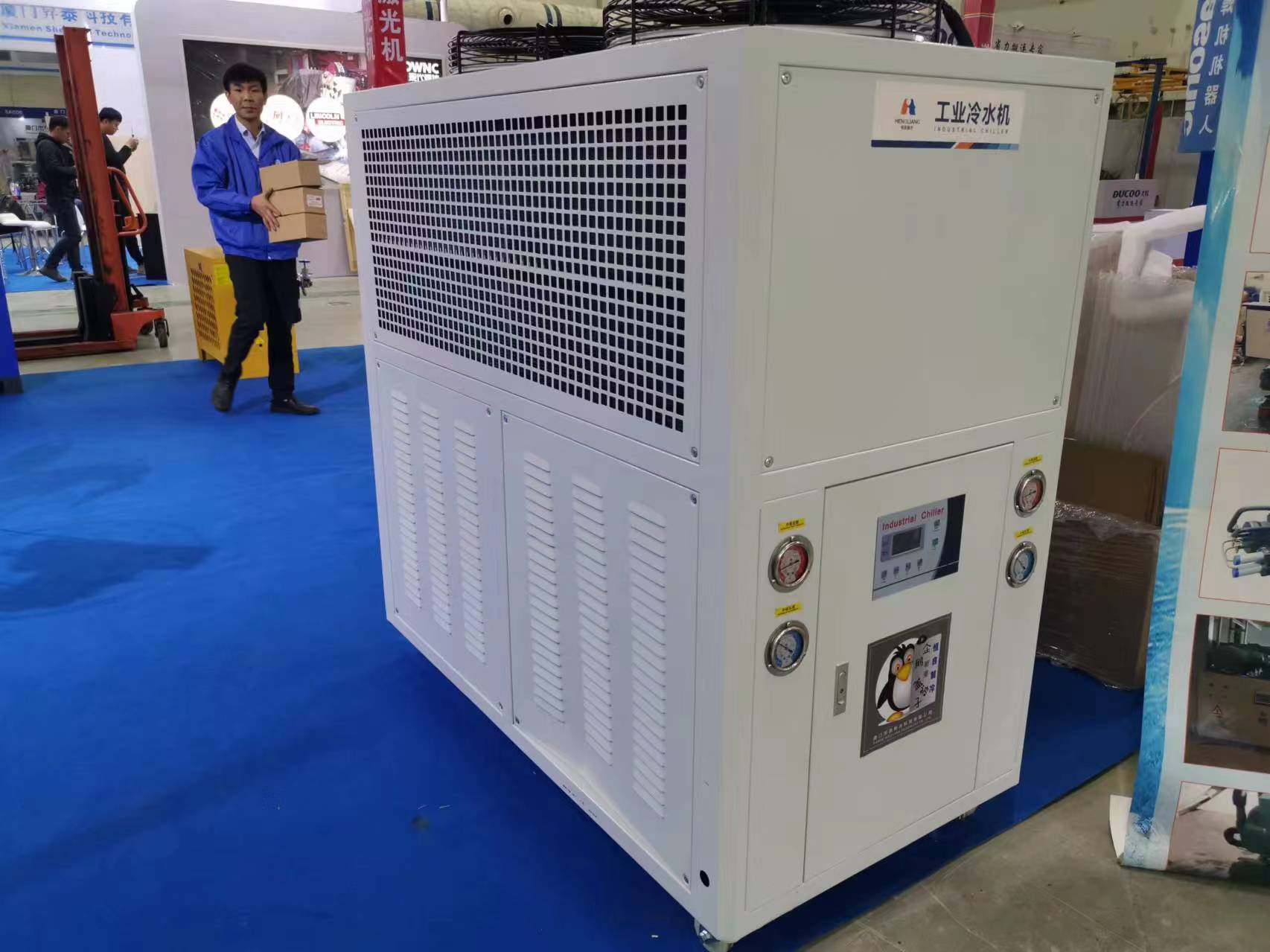
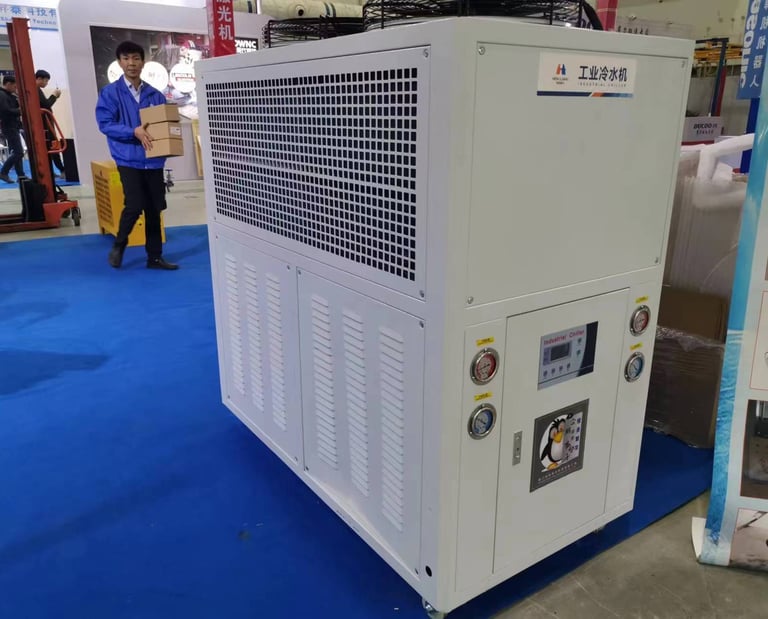
What Is Chiller Equipment?
Chiller equipment is a closed-loop refrigeration system that extracts heat from a liquid—typically water or a water-glycol mixture—and transfers it to the surrounding environment. The chilled fluid is then circulated to process equipment, heat exchangers, molds, or air handling systems.
Compared with conventional refrigeration units, industrial chillers offer:
Higher cooling precision
Continuous-duty operation
Better system scalability
Integration with automated control systems
This makes them essential for process stability, especially in industries where even minor temperature fluctuations can cause defects, downtime, or energy waste.
System Types Covered Under Chiller Equipment
This category covers both chilled water systems and direct expansion refrigeration equipment, which are applied in different industrial cooling scenarios.
Chiller Equipment Classification by Cooling Method
Different facilities require different heat rejection solutions. The most fundamental classification of chiller equipment is based on how heat is dissipated from the system.
Air-cooled chillers are typically selected for their ease of installation and low infrastructure requirements, while water-cooled chillers are favored in large-scale or continuous applications where higher efficiency and stable performance are required.
Scroll chillers are commonly used in compact or modular systems with moderate cooling loads.
Screw chillers dominate mid-to-large industrial applications due to their stability and energy efficiency.
Centrifugal chillers are designed for very high-capacity systems where continuous operation and long-term efficiency are critical.
Understanding compressor characteristics helps users align chiller performance with actual process demands rather than oversizing or underutilizing equipment.
Chiller Equipment by Application and Function
Not all chillers serve the same purpose. Beyond basic cooling, chiller equipment is often customized for specific industrial functions.
Chiller Equipment Classification by Compressor & System Design
The compressor is the core component of any chiller system. Its type directly affects efficiency, noise level, load adaptability, and maintenance strategy.
For example, a process chiller used in plastic injection molding focuses on rapid and stable mold temperature control, while a glycol chiller is designed for low-temperature environments where freezing protection is essential.
This application-based classification helps buyers quickly identify which system architecture best matches their operational needs.
Typical Industrial Applications of Chiller Equipment
Chiller equipment is widely used across industries, including but not limited to:
Plastic injection molding and extrusion lines
Food and beverage processing
Chemical and pharmaceutical manufacturing
Laser cutting and CNC machining
Cold rooms, freezer rooms, and blast freezers
HVAC systems for commercial and industrial buildings
In each scenario, precise temperature control directly influences product quality, process repeatability, and energy consumption.
Key Factors in Chiller Equipment Selection
Selecting chiller equipment should always start from process requirements, not just nominal cooling capacity.
Critical considerations include:
Required cooling temperature and stability
Heat load variation during operation
Available installation space and infrastructure
Energy efficiency targets
Future system expansion possibilities
A properly selected chiller system reduces operational costs, minimizes downtime, and ensures long-term reliability.
Integrated Chiller Solutions for Industrial Systems
Modern chiller equipment is increasingly delivered as integrated systems, combining chillers, pumps, control panels, and safety devices into a unified solution. This approach simplifies installation, improves system coordination, and allows for smarter temperature control through PLC or IoT-based monitoring.
For facilities operating cold rooms, freezer rooms, or ripening systems, chillers often serve as the central cooling source, feeding multiple temperature zones with different control requirements.
Custom Chiller Equipment for Your Application
Every industrial application presents unique cooling challenges. Whether you require a compact air-cooled chiller, a high-capacity water-cooled system, or a low-temperature glycol solution, professional system design ensures optimal performance and energy efficiency.
Our chiller equipment solutions are engineered with:
Application-specific system design
Reliable industrial-grade components
Flexible capacity configuration
Long-term operational stability
Contact our technical team to discuss your cooling requirements and receive a tailored chiller equipment solution designed for your industry.

Get a Custom Chiller Equipment Solution
Tell us your cooling requirements and our engineers will design a reliable, energy-efficient chiller system for your application.
HENGLIANG COOLING
We design, manufacture, and deliver integrated refrigeration solutions, including cold rooms, ripening room systems, and industrial chillers for global commercial and industrial applications.
SERVICES
Request a Customized Solution
© 2002-2026. All rights reserved.
Address
Xiamen, Fujian, China
Contacts
+86 18350573206
alan@xhllq.com